
 Image 1 of 1
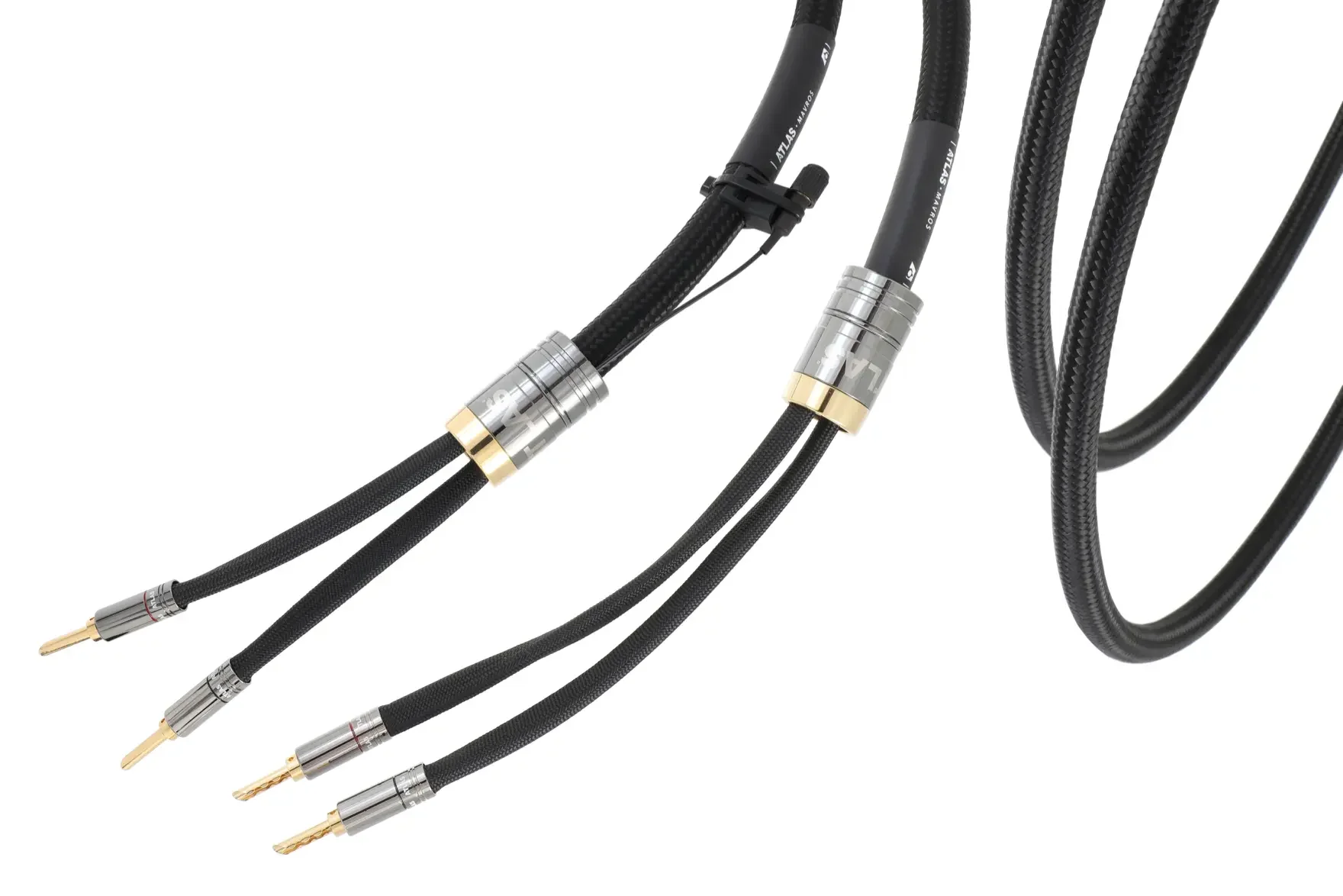
Mavros has been a mainstay of our product lineup for some considerable length of time and has proven to be a reliably successful choice for an extremely wide range of equipment.
Of course, given our policy of continuous improvement, it’s been progressively refined and finessed over the years, and this latest-generation Mavros offers substantial gains in sound quality.
The new design takes some cues from our remarkable Arran Speaker cable; in other areas it‘s a result of investigating how we could improve both the efficiency and overall build quality of the cable, both factors which we know yield audible benefits.
Firstly, the conductor topology has been refined; uniquely designed for single wire, bi-wire and bi-amping use, we’ve retained its combination of solid and stranded cores (same overall 2mm² as its predecessor) but in a slightly different configuration. (In the Bi-wire version, a single solid conductor is allocated to HF/Mid use whereas the stranded conductors are allocated to LF).
Next, a revision of the dielectric, with our customary — and exclusive — microporous PTFE composition, but now with improvements to geometric stability. Wrapped microporous PTFE has huge benefits in terms of open, natural and accurate sound, however increasing the amount to maintain the desired electrical parameters during manufacturing can affect the cable geometry, becoming non-concentric. The solution is to apply a thin but strong Polyethylene liner around the microporous PTFE during the manufacturing process.
Mavros has been a mainstay of our product lineup for some considerable length of time and has proven to be a reliably successful choice for an extremely wide range of equipment.
Of course, given our policy of continuous improvement, it’s been progressively refined and finessed over the years, and this latest-generation Mavros offers substantial gains in sound quality.
The new design takes some cues from our remarkable Arran Speaker cable; in other areas it‘s a result of investigating how we could improve both the efficiency and overall build quality of the cable, both factors which we know yield audible benefits.
Firstly, the conductor topology has been refined; uniquely designed for single wire, bi-wire and bi-amping use, we’ve retained its combination of solid and stranded cores (same overall 2mm² as its predecessor) but in a slightly different configuration. (In the Bi-wire version, a single solid conductor is allocated to HF/Mid use whereas the stranded conductors are allocated to LF).
Next, a revision of the dielectric, with our customary — and exclusive — microporous PTFE composition, but now with improvements to geometric stability. Wrapped microporous PTFE has huge benefits in terms of open, natural and accurate sound, however increasing the amount to maintain the desired electrical parameters during manufacturing can affect the cable geometry, becoming non-concentric. The solution is to apply a thin but strong Polyethylene liner around the microporous PTFE during the manufacturing process.